
Three Textures, Not Thirty
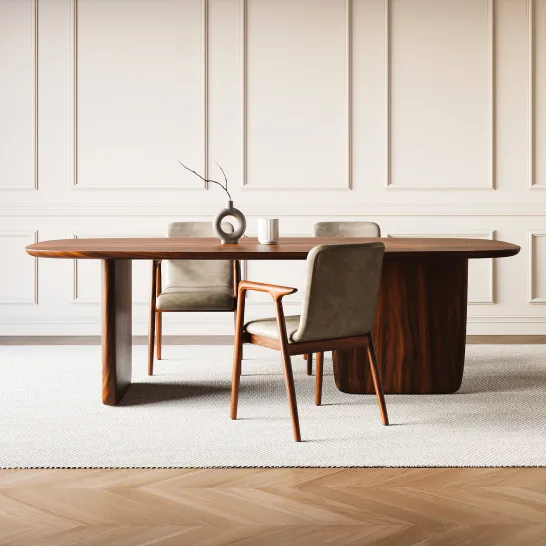
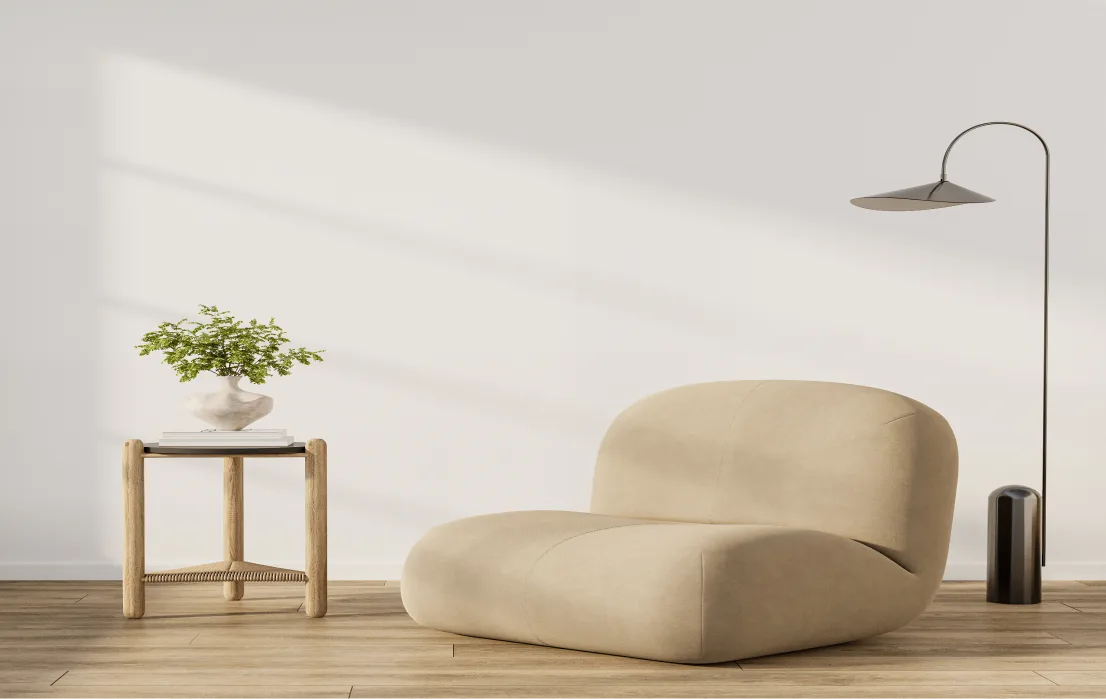
Layering does not mean adding until something sticks. Pick three textures and repeat each of them at least twice in the room: a smooth one, a woven one and a pile. The repetition is the part people skip, and it is the part that makes a room read as composed rather than collected.
Keep them close in colour and far apart in surface. Two shades of oat in wool and in glazed ceramic look considered; the same oat in two near-identical fabrics looks like an accident of ordering.
A Working Combination
- Smooth: oiled wood, glazed ceramic, a plastered wall.
- Woven: linen curtains, a flatweave rug, a basket that is actually used.
- Pile: boucle on one seat, wool on the throw, nothing else.
Light Is a Texture Too
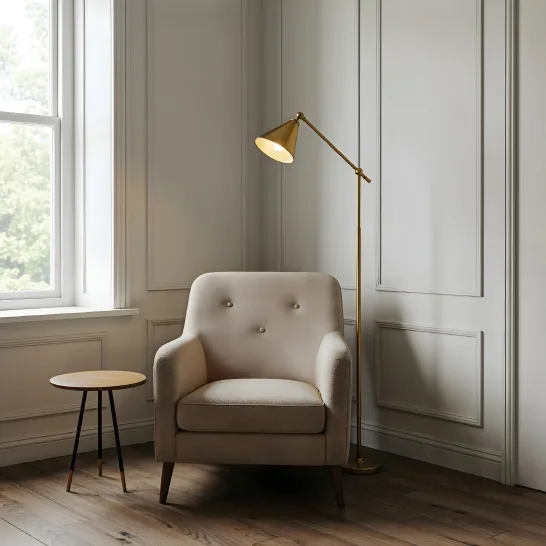
A hard downlight flattens every surface in the room, which is why a carefully layered room can still look thin at night. Side light rakes across a weave and shows it. One lamp moved from the ceiling to a side table will do more for texture than another cushion ever will.
Texture is what a room feels like from across the room, before you have touched anything in it.
If a room still feels hard after all of this, the missing layer is almost always underfoot. A rug one size larger than the one you have is the usual answer.