
Buy the Top, Then the Base
A dining table fails at the top long before it fails at the legs. Solid timber can be sanded and re-oiled for decades; a veneer can be repaired once, carefully, and never again. If the budget only stretches one way, spend it on the surface you will put hot plates and homework on.
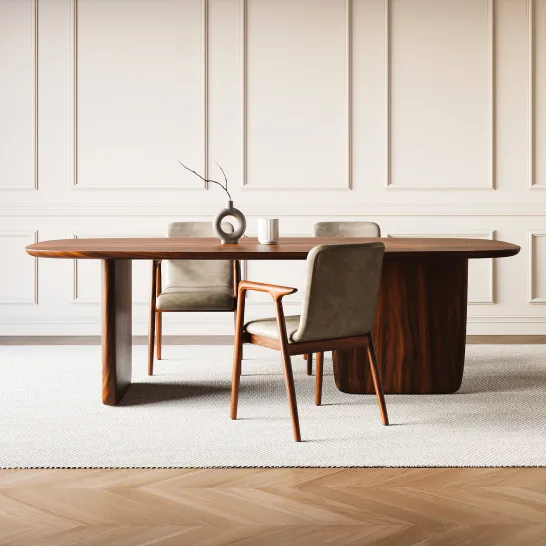
Then look underneath. A trestle or pedestal base gives everybody somewhere to put their knees; four corner legs give two people at every table a leg to negotiate. For a table that seats six or more, the base decides how many people can actually sit comfortably.
The Measurements That Matter
- 60 cm of table edge per person, and 70 if the chairs have arms.
- 90 cm from the table edge to the nearest wall, or nobody can get out once seated.
- An apron shallow enough that a chair arm slides under it.
- A top thickness of at least 25 mm in solid wood, or it will cup within a year.
Finish Decides the Next Ten Years
An oiled top marks more easily and repairs at home in an afternoon. A lacquered top resists marks until it does not, and then it goes back to a workshop. Neither is wrong, but they ask for different households — an oiled table suits people who would rather sand than worry.
The table you keep is not the one that never marks. It is the one you can put right yourself.
Tape the footprint out on the floor before ordering. Almost every table returned for being too big fitted the room perfectly and left nowhere to walk.