
Match the Bulb to the Wood
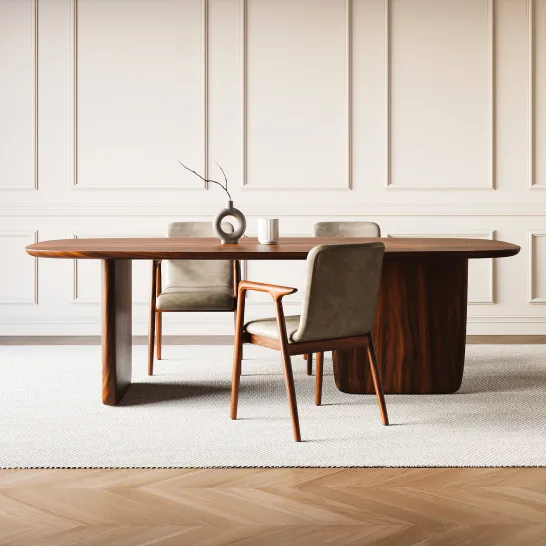
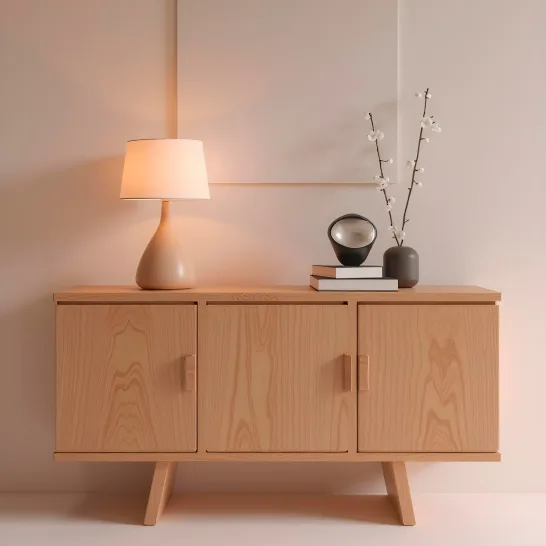
Warm timber under cool light goes grey, and a whole room of carefully chosen oak can look cheap because of a bulb. Keep everything at 2700K and the wood does what it was bought to do. It is the least expensive change in any room and usually the most visible.
Colour temperature also decides how the quiet colours behave. Oat, plaster and chalk all shift towards green under cool light and towards cream under warm light, which is why a paint sample that looked right in the shop can look wrong on the wall at seven in the evening.
Three Lights, Three Heights
- One at floor level, throwing up a wall.
- One at table height, for reading and for the pool of light a room needs at night.
- One above eye level, dimmed, doing the least work of the three.
Let One Colour Be Loud, Quietly
A room of quiet colours needs one thing that is not quiet, or it flattens. Keep it small and keep it solid — a terracotta shelf, a deep green chair, a single glazed vase — and let everything else stay level. The trick is that the loud thing has to be an object you would have bought anyway, not an accent added to solve a composition.
Change the bulbs before you change the paint. It is cheaper, it is faster, and half the time it was the bulbs.
Test any paint or fabric against the wood itself, in the room, at the hour you actually use it. Every other test is a guess with better lighting.